荆棘鸟
Chinese conservationist explores community-based wildlife protection in Kenya_我的网站

A | 侵华日军第七三一部队罪证陈列馆12日公布了原731部队海拉尔支队(满洲第543部队)《身上申告书》档案。

B |
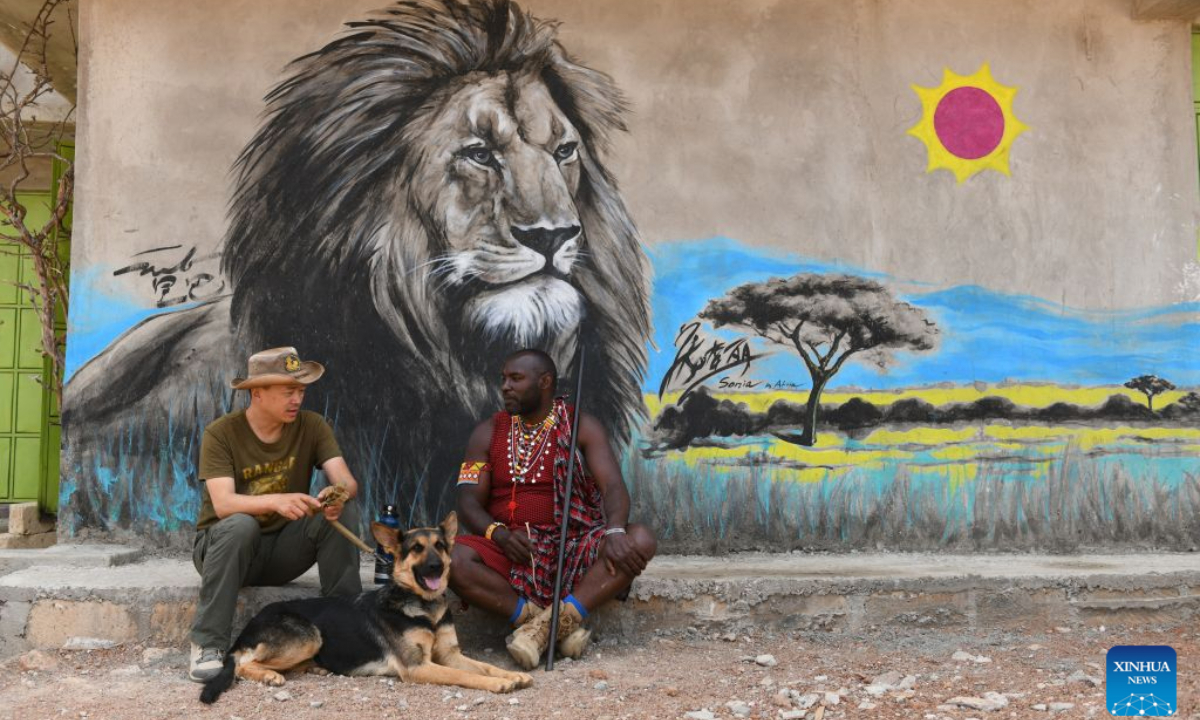
Zhuo Qiang (L) talks with Simon Msago, a Maasai community leader in Ngoswani, in Narok, Kenya, Aug. 12, 2026. (Xinhua/Liu Qiong)As dawn breaks over Ol Kinyei Conservancy in Kenya's Maasai Mara ecosystem, rangers are already combing the grasslands for signs of unauthorized entry and poaching while keeping a close watch on wildlife.
Among them is Chinese conservationist Zhuo Qiang, nicknamed "Simba," the Swahili word for lion. For him, this early-morning routine is driven by a broader mission to achieve human-wildlife coexistence.
In 2010, Zhuo left his job in China at the age of 37 and embarked on a less-traveled path: pursuing wildlife conservation in Kenya.
Without professional training in wildlife conservation, he found himself in a territory then dominated by Western organizations and local practitioners.
But Zhuo decided to stay. "I wanted to prove that Chinese people could also do wildlife conservation," he said.
Initially, Zhuo saw conservation largely through the lens of wildlife science: working in the field, studying animals and collecting data.
Living and working with Maasai communities changed that perspective. "The fate of wildlife was closely tied to the people sharing the same land," he said.
In the Maasai Mara ecosystem, livestock grazing is deeply connected to the livelihoods of pastoral communities. "If local people are asked to stop grazing but are given no alternative source of income, conservation cannot be sustainable," Zhuo said.
That principle laid the foundation for his work with the local community in establishing the Ol Kinyei Conservancy.
The area had suffered from prolonged overgrazing, with plants and the land itself deteriorating. Under the conservation model, local grazing land was leased and gradually restored, allowing vegetation to recover and creating a more suitable habitat for wildlife, said Zhuo.
Meanwhile, households participating in the scheme receive land-rental income and have access to jobs such as wildlife rangers and tourism workers. Their average annual income has increased from around 500 U.S. dollars to about 3,700 dollars, according to Zhuo.
Some residents from surrounding communities also learned from the experience and brought the approach back to their own grazing areas.
Nowadays, 26 private conservancies have been established around the Maasai Mara National Reserve, covering about 1,600 square km, according to Zhuo.
He believes the network of community conservancies provides additional safe space for wildlife to move and survive, extending conservation efforts beyond the boundaries of a single national reserve and into surrounding communities.
Simon Msago, a Maasai community leader in Ngoswani, said Zhuo's work encouraged more residents to take an active role in conservation.
In the past, many residents saw few direct benefits from wildlife conservation and had limited awareness of its importance. Today, community members are increasingly willing to work as rangers and protect wildlife, creating an effective layer of protection around the conservancies, Msago said.
"Human-wildlife conflict cannot be solved simply through restrictions and prohibitions. The key is to create alternative sources of income so that residents can gain tangible benefits from conservation," Zhuo said.
"That is what makes community-based conservation sustainable -- allowing local people to become part of wildlife conservation rather than bystanders with no stake in it."
While continuing his work in the Maasai Mara, Zhuo has also sought to strengthen exchanges between China and Africa in wildlife conservation.
In recent years, he has visited more than 30 nature reserves and national parks in China, sharing his experiences of community-based conservation in Africa with Chinese counterparts.
"Conservation practices in China and Africa each have their own characteristics, and there is much that the two sides can learn from each other," he added.
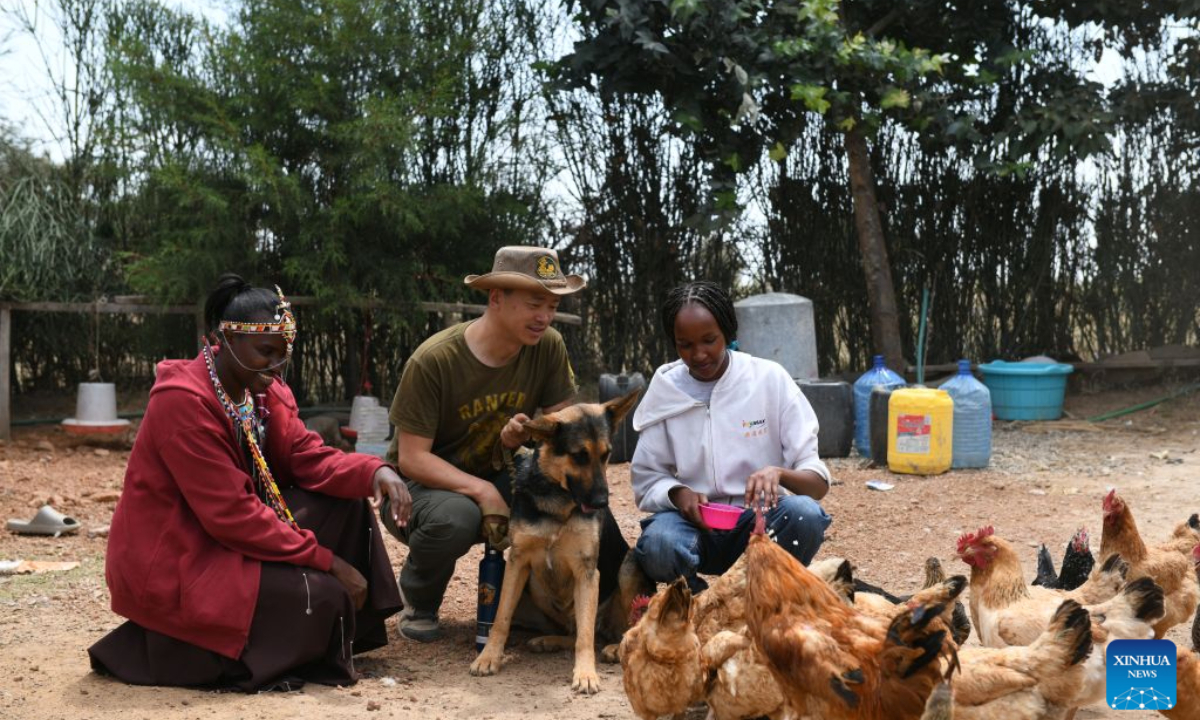
Zhuo Qiang (C) checks the chickens raised by local residents in Narok, Kenya, Aug. 12, 2026. (Xinhua/Liu Qiong)
。该档案显示侵华日军曾假借常规步兵名义掩护细菌战罪行,并揭示了战后苏联持续追责日本细菌战罪行的历史细节。 日本关东军曾在中国东北为731部队设立海拉尔、孙吴、牡丹江、林口、大连等5个支队。其中,海拉尔支队位于内蒙古自治区东北部,靠近中蒙中苏边境,是对苏发起细菌战的前线基地。 《身上申告书》即“个人信息登记表”。此次公布的档案共计185页,记载了海拉尔支队156名成员的姓名、军衔、入伍时间、岗位职责、调动轨迹及战后去向等关键信息,是研究该支队人员构成与运行机制的一手官方文书。 专家表示,海拉尔支队《身上申告书》深化了731部队问题研究,与此前获取的原队员口述证言形成了证据链。这一官方档案拆穿了日军掩盖反人类罪行的伪装,进一步证实了日本发动细菌战的国家犯罪体系,对加强731部队罪证研究及战后审判史研究具有重要补充价值。 记者:杨思琪、何山 摄制:徐率 音视频部制作。
Current article:http://o7te0iv.miaorediancuisuilianzouguang.cyou/xrul/20260826/32028.html
Published on:21:16:56
 怀旧经典,新游扎堆!暑期武侠MMO大乱斗!十一年老服焕新
工商银行
怀旧经典,新游扎堆!暑期武侠MMO大乱斗!十一年老服焕新
工商银行
 记者:克洛普致电穆西亚拉询问健康状况,并明确表示他是德国核心
绅士的品格
记者:克洛普致电穆西亚拉询问健康状况,并明确表示他是德国核心
绅士的品格
 族谱印证血脉渊源 台青赴福建诏安寻根谒祖
不要恋爱要结婚
族谱印证血脉渊源 台青赴福建诏安寻根谒祖
不要恋爱要结婚
 方便面又好卖了?三大巨头业绩集体回暖
林中小屋
方便面又好卖了?三大巨头业绩集体回暖
林中小屋
 Xbox设计主管揭秘:每一代主机的设计都受到了一款宜家产品的启发
夫妇飞美国打儿媳
Xbox设计主管揭秘:每一代主机的设计都受到了一款宜家产品的启发
夫妇飞美国打儿媳
 数百条肥美鲷鱼冲上奥克兰海滩,渔业局:别吃!
致命id
数百条肥美鲷鱼冲上奥克兰海滩,渔业局:别吃!
致命id

 微信
微信 移动端
移动端